
If your living room feels cluttered, cramped, or “off” no matter how much you rearrange or redecorate, you’re not alone. Many homeowners unknowingly make one simple mistake that silently ruins their layout, weakens their decor, and disrupts the entire flow of the room. The good news? Once you stop doing this one thing, your living room instantly feels bigger, brighter, and far more stylish.
So what is the mistake?
Pushing all your furniture against the walls.
It seems logical — after all, leaving the center open should make the room feel larger, right?
Actually… it does the opposite.
Let’s break down why you should stop doing this immediately, and what to do instead for a living room you’ll fall in love with.
Why Wall-Hugging Furniture Is Ruining Your Living Room
Most people push sofas, chairs, and side tables all the way against the walls to “maximize space.” But interior designers avoid this for several reasons:
1. It destroys the room’s natural flow
A room with “empty center syndrome” feels like a hallway, not a cozy gathering space. When furniture is spread out too far, the room loses its sense of purpose — and people naturally sit farther apart, creating an awkward atmosphere.
2. It makes the room feel bigger but emptier, not cozier
When everything is pushed to the edges, the room may technically feel wide, but visually it feels cold, open, and unfinished.
Proper furniture spacing creates a sense of intimacy, warmth, and balance.
3. It weakens your focal point
Every good living room has a focal point — a fireplace, TV wall, large window, or statement art. Wall-hugging furniture breaks this visual anchor, making the room feel unfocused and chaotic.
4. It kills your decorating flexibility
With everything backed against a wall, you lose opportunities for:
- side tables
- rugs
- accent chairs
- layered lighting
- cozy conversation zones
In other words: you limit your entire design.
What You Should Do Instead: “Float” Your Furniture
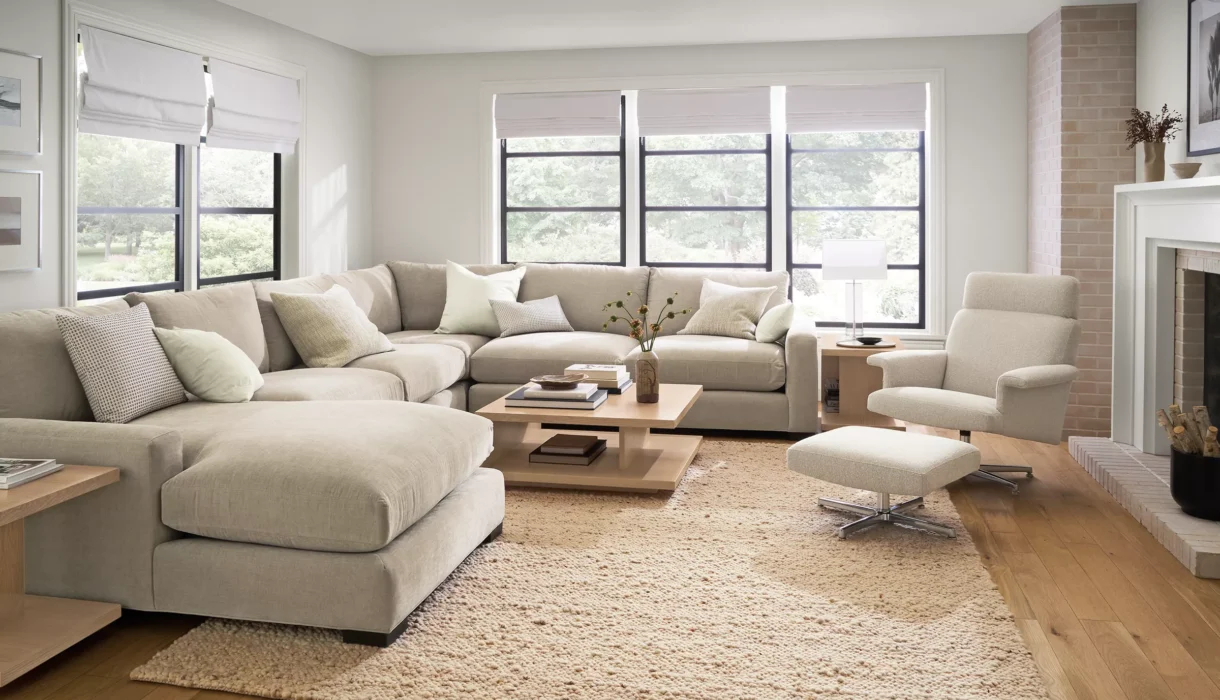
The designer-approved solution is simple: bring your furniture away from the walls and create a centered seating arrangement.
This is called floating furniture, and it is one of the easiest ways to make your living room look professionally designed.
Here’s what it changes instantly:
✔ Creates a cozy conversation area
People face each other naturally, and the room becomes more welcoming.
✔ Makes the room look intentionally styled
Even inexpensive furniture looks high-end when arranged well.
✔ Allows space for better lighting and decor
Once furniture isn’t glued to the wall, you can add:
- floor lamps
- side tables
- large indoor plants
- layered textures
- decorative baskets
Suddenly, your living room has depth.
✔ Makes the room feel larger — not smaller
A properly balanced room has breathing space around each piece. Instead of empty walls and crowded corners, you get a visually even layout that feels airy and modern.
How to Float Your Furniture Like a Designer (Simple Steps)
Step 1: Start with the rug
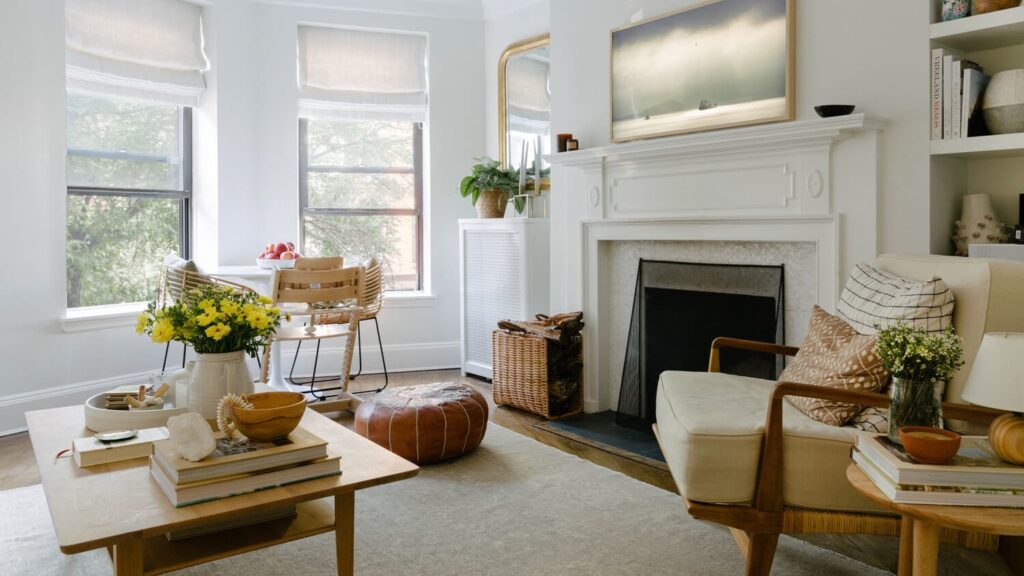
Your rug should anchor the seating area. Ideally, the front legs of your sofa and chairs sit on the rug, bringing the layout together.
Step 2: Pull the sofa forward 10–18 inches
Even a small gap between the wall and your sofa changes the entire room dynamic.
Step 3: Create a U or L-shaped layout
Place your sofa and chairs facing each other (or at soft angles) around a coffee table. This instantly creates flow.
Step 4: Add a centerpiece
Coffee table, ottoman, statement rug — something to visually ground the space.
Step 5: Use lamps and plants to frame the area
Floor lamps, arc lamps, and tall plants add height and dimension, completing the floating look.
Bonus: Common Living Room Mistakes to Avoid
Stopping the “everything against the wall” habit is a game changer, but while you’re improving your space, avoid these common pitfalls too:
- Using a rug that’s too small
- Cluttering every inch of surface space
- Mixing too many decor styles at once
- Choosing lighting that’s too harsh or too dim
- Placing the TV too high on the wall
Fixing these makes your room instantly more comfortable and polished.
If you want a living room that feels stylish, spacious, and inviting, stop pushing all your furniture against the walls. This one simple shift is often the key difference between a room that feels “off” and a room that looks professionally designed. By floating your furniture and creating a defined seating area, you’ll improve flow, balance, and comfort — and finally enjoy a space that feels like home.

🌿 Peter Stevens is a passionate gardening writer and plant enthusiast with over a decade of hands-on experience. From urban balcony gardens to full-scale backyard transformations, she shares practical tips and inspiration to help everyone grow their green space. When she's not writing, you'll find her with soil under her nails and a smile on her face. 🌱
View All Articles