
When I first moved into a small apartment, I thought the only way to make it feel bigger was to dream about a larger place. But over time, I realized the walls weren’t the problem, but the way I was using the space was.
A mirror across from a window doubled the light, a new paint color softened the edges, and suddenly, what once felt cramped became surprisingly open.
That’s the real secret designers know: space isn’t just measured in square footage, it’s measured in perception. The way light flows, the colors you choose, and even how your furniture sits in a room it all shape how big or small your home feels.
And the good news? You don’t need a remodel or an endless budget to make these changes.
Here are seven designer-approved tricks that expand your home in all the right ways. Think of them as optical illusions for your everyday living, practical enough to try today.
Reflection That Expands the Room
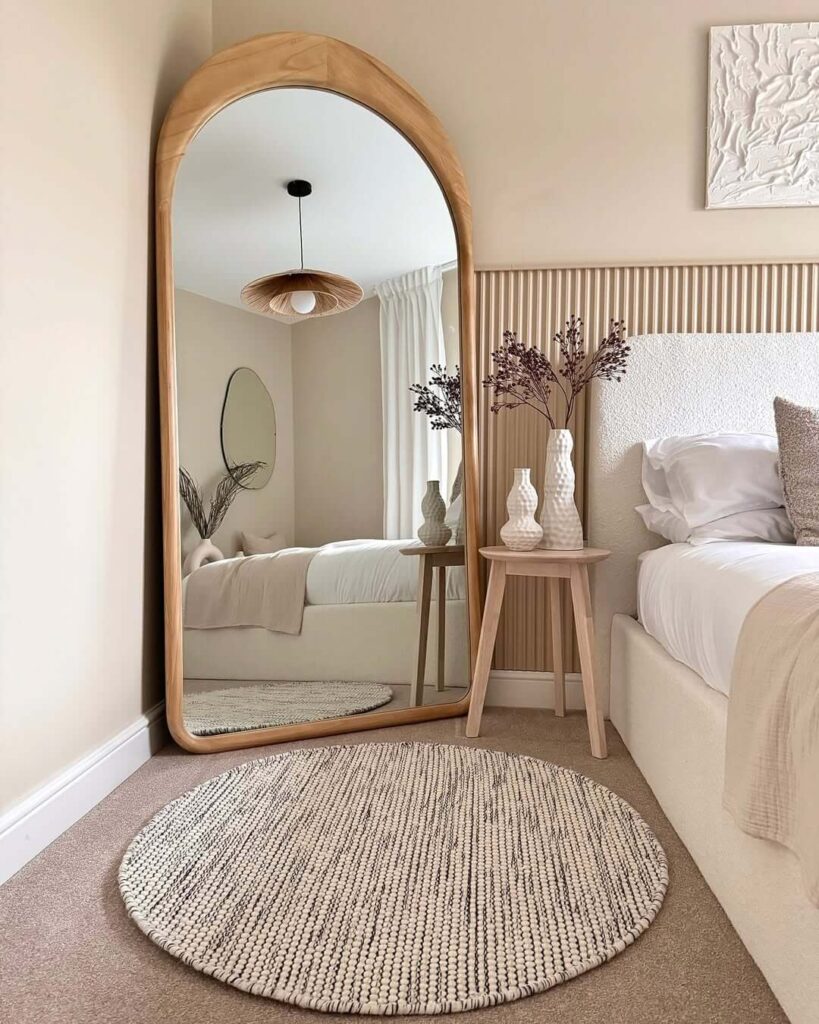
A large bedroom mirror to reflect light
Few updates work as quickly as mirrors. They don’t just hang on a wall, they multiply light and extend what your eye sees.
Place one across from a window and suddenly the outdoors becomes part of your interior. Position one behind a lamp, and the glow feels twice as strong.
Quick Action Step: Add a mirror across from your largest window or a light fixture to double brightness.
Small-Space Twist: No room for a giant statement piece? Group two or three smaller mirrors like artwork, they’ll still amplify the light without overwhelming the wall.
And once your walls start reflecting more light, color becomes the next tool for opening up space.
A Color Palette That Flows
Paint is one of the most powerful tools for transforming how a room feels. Dark, broken-up colors stop the eye, while light, cohesive tones let it glide from one corner to another.
I once painted a narrow hallway in a soft cream, and almost instantly, the space felt wider and more relaxed.
Many designers recommend painting trim, walls, and ceilings in the same or closely related shade so the room feels seamless instead of segmented. That continuity is what tricks the brain into seeing “more.”
Quick Action Step: Stick to pale neutrals, soft pastels, or muted tones that reflect light.
Small-Space Twist: Can’t paint? Bring in flow with textiles, light curtains, bedding, and rugs in matching tones can mimic the effect.
And of course, color sets the stage, but light is what brings a room to life.
Lighting That Shapes Perception
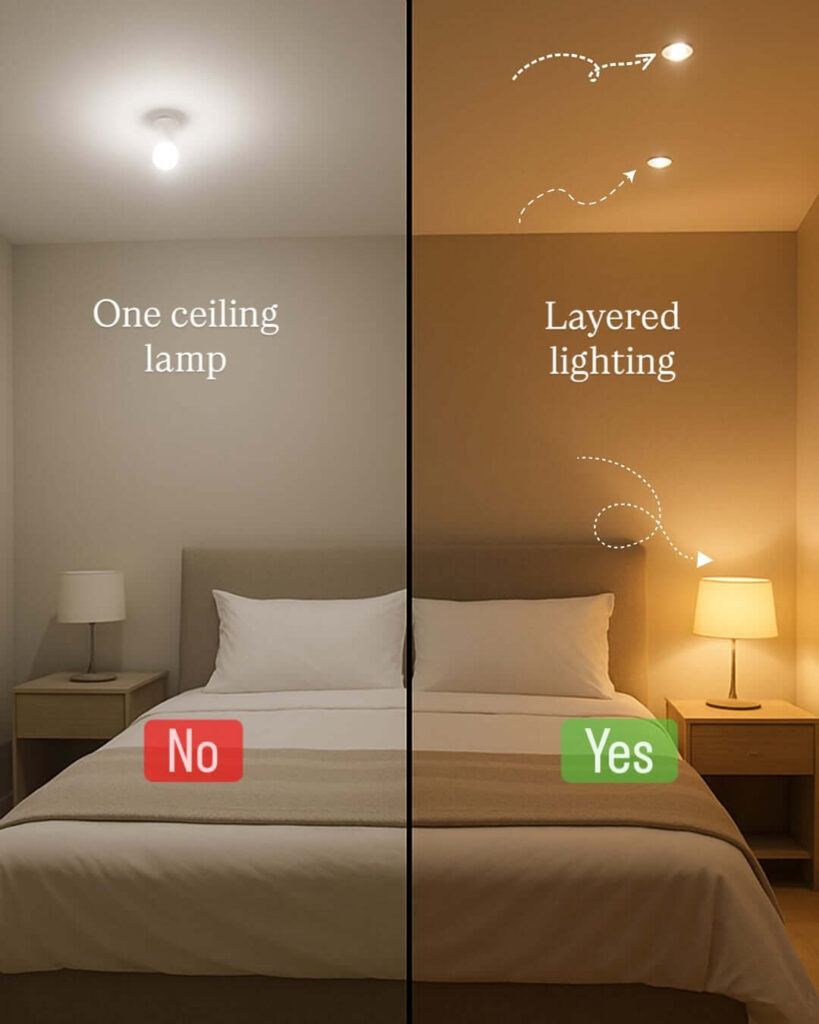
Single overhead lighting vs layered lighting
In a small room, one lonely ceiling bulb doesn’t do you any favors. It leaves shadows clinging to the corners, making the space feel flat and boxed in.
Compare that to layered lighting; a mix of ceiling spots, table lamps, and wall glow, and suddenly the room feels warmer, deeper, and more open.
When I swapped out a single overhead light for layered options, the change was dramatic. It wasn’t just brighter, it created a flow that made the whole room feel bigger.
Think of layered lighting as designing with light, not just switching it on.
Quick Action Step: Combine at least two types of lighting—overhead plus a table or floor lamp.
Small-Space Twist: Use slim lamps or wall-mounted fixtures to save floor space while still adding depth.
Once your lighting feels balanced, it’s time to look at what’s taking up the most space, your furniture.
Furniture That Breathes
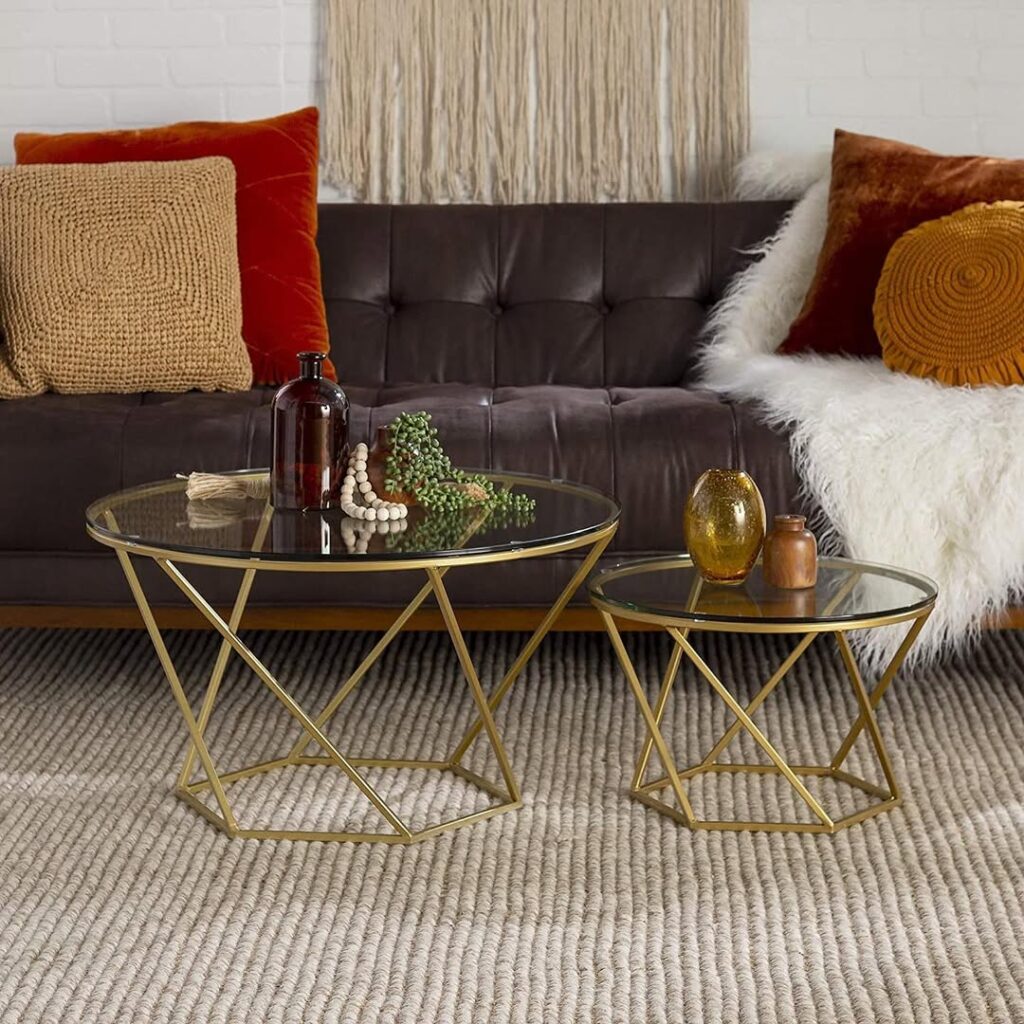
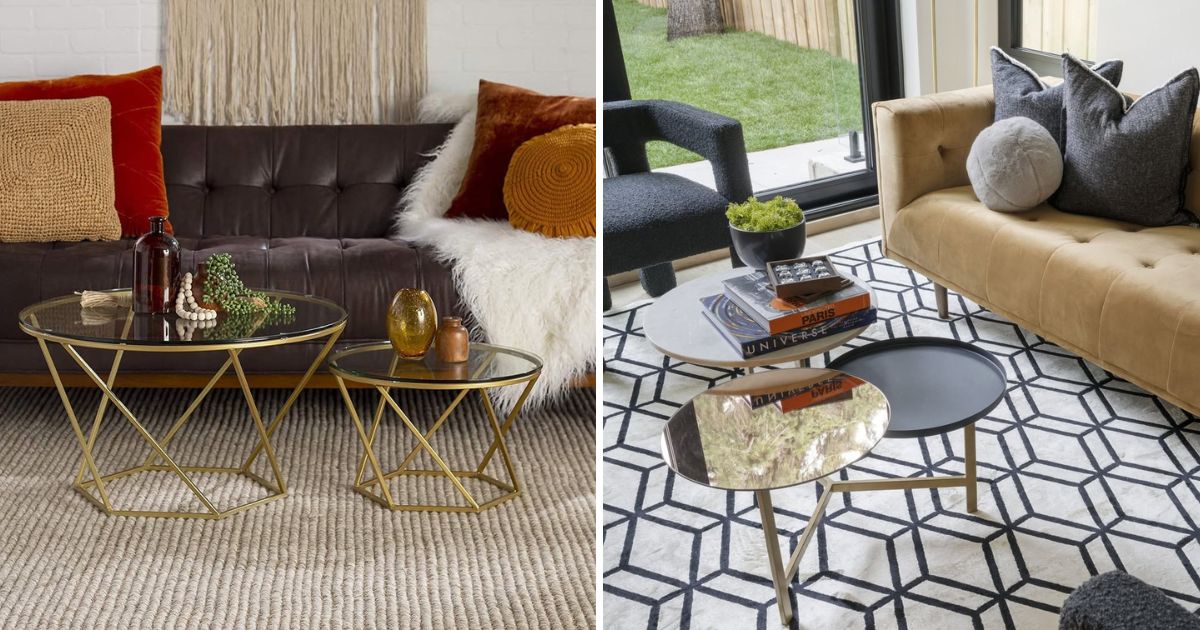
Nesting table with glass top
Furniture doesn’t just fill a room, it defines how open or cramped it feels. Chunky, ground-hugging pieces eat up space, while slimmer, lifted designs invite air to circulate visually.
A slim sofa on legs, a coffee table with a glass top, or a chair with a slender frame lets you see more floor, which naturally makes the room feel larger.
You can also use multifunctional furniture, like storage ottomans or nesting tables, as a way to keep small rooms functional without sacrificing style.
Quick Action Step: Choose furniture with legs, lighter frames, or glass tops to keep the floor visible.
Small-Space Twist: Replace a bulky coffee table with a nesting set you can tuck away when not in use.
And when your furniture is lighter, your eye naturally travels upward, which is where vertical details come in.
Vertical Details That Draw the Eye
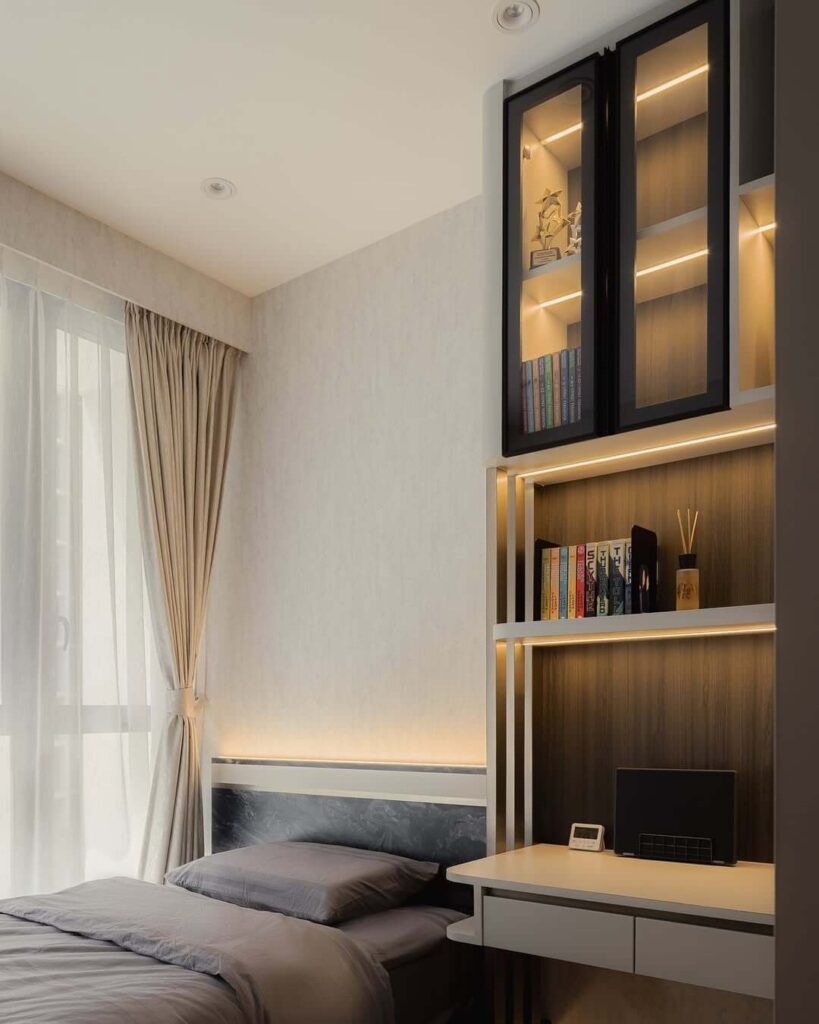
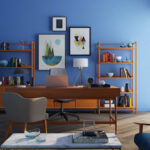
Vertical storage cabinets
When square footage is limited, the only place left to expand is skyward. Vertical elements like curtains that reach the ceiling, tall shelving, or even a narrow piece of art pull the gaze upward, making ceilings feel higher.
Even a tall houseplant can lift the room’s proportions.
Quick Action Step: Hang curtains six inches or more above your window frame to elongate walls.
Small-Space Twist: Add vertical accents like striped rugs, tall floor lamps, or wall-mounted lighting to exaggerate height without construction.
But even the tallest curtains won’t help if clutter is weighing everything down.
Clear Surfaces, Clear Space
Nothing shrinks a room faster than clutter. A coffee table buried in knick-knacks or a counter crowded with appliances creates instant chaos. Editing down gives a room breathing room and, interestingly, gives you mental clarity too.
Research shows that tidy spaces reduce stress and increase focus, your brain interprets order as calm.
Quick Action Step: Limit each surface to one or two intentional pieces.
Small-Space Twist: Hide daily items in baskets, side tables with doors, or ottomans that double as storage.
With surfaces cleared, your floor becomes the final piece of the puzzle and rugs can either divide or expand it.
Rugs That Expand Instead of Divide
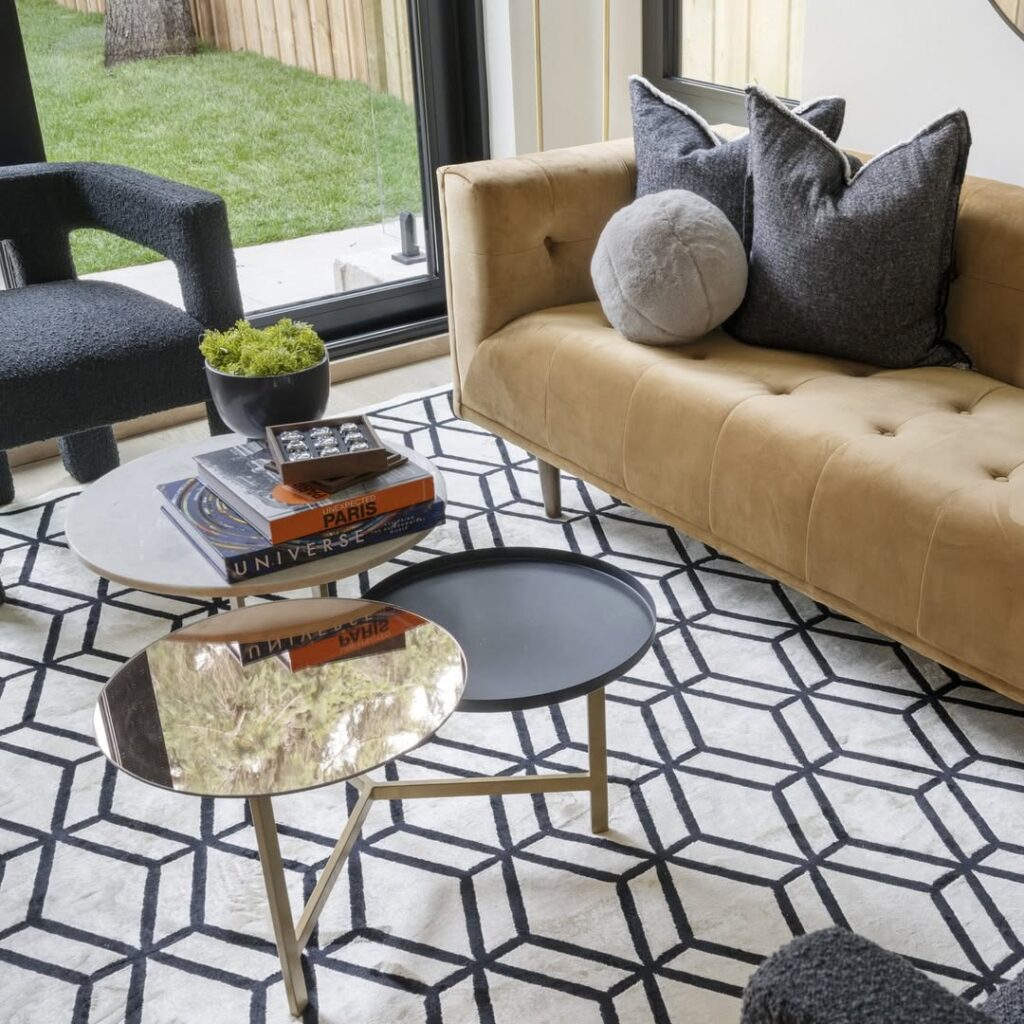
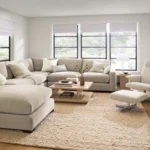
A large rug to expand the living room
Rugs are often overlooked, but they can make or break a small room. Too many little rugs chop the floor into zones, making spaces look smaller. A single oversized rug, however, connects the room and visually enlarges the floor area.
Living in a small space doesn’t mean living small. With just a few intentional updates, mirrors, color, lighting, and smarter furniture, you can expand how your home feels without adding a single square foot. I’ve seen it happen in my own spaces, and the difference is huge.
Start with one simple shift: hang a mirror, swap out heavy curtains, or clear a surface. These little moves expand more than your home, they expand how you experience it every day.

🌿 Peter Stevens is a passionate gardening writer and plant enthusiast with over a decade of hands-on experience. From urban balcony gardens to full-scale backyard transformations, she shares practical tips and inspiration to help everyone grow their green space. When she's not writing, you'll find her with soil under her nails and a smile on her face. 🌱
View All Articles